What "No Poly" Really Means on a Canada Hills Listing
September 3, 2026
September 3, 2026
Scroll through active and recently sold listings in Canada Hills and you start noticing the same two words showing up in places you would not expect them. "No Poly." "All polybutylene plumbing replaced with AquaPex 2022." "No poly pipes!" Different agents, different years, different price points, same volunteered detail nobody asked for yet.
That is not a coincidence, and it is not marketing filler. It is sellers answering a question before a buyer, an inspector, or an insurance underwriter gets the chance to ask it first.
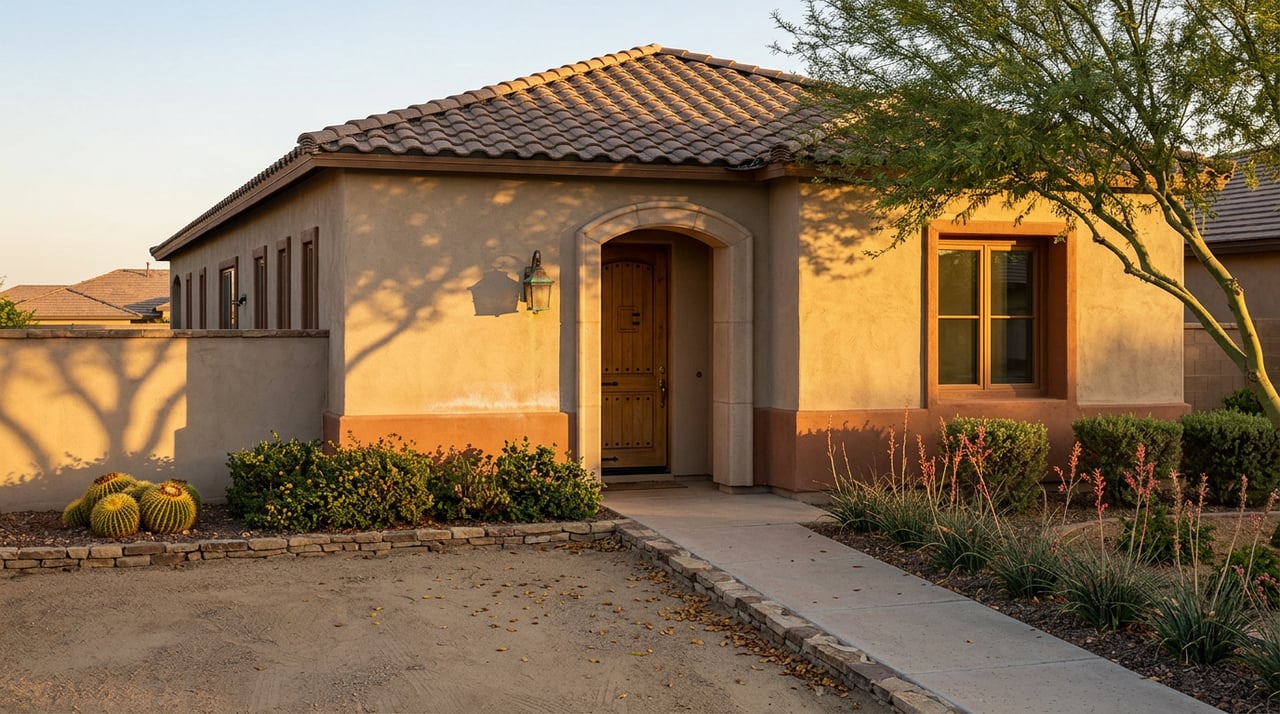
Canada Hills grew up around the El Conquistador Golf Course, and the community as most people know it today spans five distinct pockets: Canada Hills Estates, Autumn Hill, Masters Hill, Canada Vista, and Canada Hills proper. Housing stock across that footprint, and in adjoining gated pockets like Villages of La Canada that show up in the same searches, runs mostly 1990s and 2000s construction, a mix of one and two story homes.
That matters because Tucson plumbers were installing polybutylene pipe in new construction from about 1982 until 1997, right up until the material became the subject of a nationwide class-action lawsuit over its high failure rate. A Canada Hills home finished in the early or mid 1990s sits squarely inside that window. One finished after the material fell out of use generally does not, which is exactly why the plumbing question splits this neighborhood's homes into two very different disclosure conversations rather than one.
Newer Oro Valley subdivisions built well after the late 1990s mostly skipped the issue entirely. Canada Hills, spanning the years it does, did not.
Arizona sellers complete a Seller's Property Disclosure Statement, and the plumbing section asks the question directly:
"Are you aware of the type of water pipes, such as galvanized, copper, PVC, CPVC, PEX or polybutylene?"
That form is not optional paperwork you skim. Under the standard resale purchase contract, a seller has to deliver a completed SPDS within days of contract acceptance, and the disclosures on it are warranties that survive closing. Arizona courts have also made clear that a known plumbing defect counts as a material fact a buyer is entitled to know about, even when the contract includes an "as is" clause. A seller who knows their home has polybutylene and stays quiet is not protected just because the paperwork says as is.
For a Canada Hills seller, that means the honest path and the strategic path are the same path: get ahead of the plumbing question rather than let it surface during someone else's inspection period.
Here is the part that catches people off guard. It is often not the buyer who kills the deal over polybutylene. It is the buyer's insurance company.
Following a 2012 Arizona court case, Guadiana v. State Farm Fire and Casualty Co., most insurers operating in the state added specific exclusions for water damage tied to polybutylene pipe. Some carriers now decline to write a new policy at all until the home has been repiped, or they issue coverage with the plumbing damage excluded outright. Since a purchase loan typically cannot close without a bound homeowners insurance policy, that conversation can land in the middle of a closing timeline, well after a buyer has already fallen for the mountain views and the fairway lot.
The timing matters because leverage shifts as a transaction moves forward.
| Stage | What can happen |
|---|---|
| Before listing | Seller controls the timeline, gets bids, decides whether to repipe or price around it |
| Inspection period | Buyer can request repairs, price credits, or walk with earnest money intact |
| Loan underwriting and insurance binder | Lender or carrier can require the repipe as a condition, often on a short deadline |
| After closing | New owner absorbs the cost and the risk, with no leverage to negotiate |
A seller who waits until an inspector flags galvanized-looking fittings or an insurance underwriter starts asking questions has handed away most of that leverage.
Local plumbers who specialize in this work give a fairly consistent range for the Tucson area. Aarow Plumbing estimates a typical whole-home repipe runs $3,000 to $7,000, while Plumber of Tucson quotes closer to $7,500 for a two-bathroom home and $8,500 for a three-bathroom home. The spread depends on square footage, number of fixtures, and whether the crew is running copper or PEX.
None of those numbers are small, but they are also not the kind of surprise that should arrive for the first time during a loan contingency deadline. Getting one or two bids before listing turns an unknown into a number you can plan around, whether that means completing the work, adjusting your price, or simply disclosing clearly and letting the buyer factor it into their offer.
Look again at those listing phrases from the opening. "No Poly." "Replaced with AquaPex 2022." Those are not accidents of copywriting. They are sellers, often working with an agent who has seen this pattern before, who already had the repipe done and chose to lead with it rather than bury it in the disclosure paperwork.
That approach does two things at once. It answers the insurance question before it becomes a closing-week emergency, and it turns a construction-era liability into a selling point that separates a listing from three other homes on the same street still running original plumbing.
If you are getting ready to sell in Canada Hills, Canada Hills Estates, Masters Hill, Autumn Hill, or Canada Vista, the plumbing question is worth answering for yourself before a buyer's inspector or underwriter answers it for you. If you are relocating to the area and shopping homes built in this window, it is a fair question to ask early, not a reason to assume the worst about a house you otherwise love.
How do I find out if my home has polybutylene pipe? A local plumber can typically confirm this with a visual inspection at the water meter, water heater, and any exposed pipe in the garage or under sinks. Polybutylene is usually gray, blue, or black plastic tubing, though copper is often used at the very end of a run where the pipe exits a wall, which can make a quick look misleading.
Does having polybutylene automatically end a sale? No. Plenty of Canada Hills homes with original polybutylene have sold and continue to sell. What changes is the conversation around price, repair credits, and how quickly your insurance and financing pieces come together.
Do I have to repipe before listing? There is no legal requirement to repipe. There is a legal requirement to disclose what you know. Many sellers choose to repipe anyway because it removes a variable that can otherwise surface late in a transaction.
What if a previous owner already told me the pipe was replaced? Ask for any invoices, permits, or plumber documentation and attach them to your disclosure paperwork. Verbal history from a prior owner is worth writing down, but paperwork is worth more if a buyer or their insurer wants proof.
Selling a home you have lived in for decades already comes with enough to think about, from timing the move to deciding what stays and what goes. The plumbing question does not need to be one more thing you discover under pressure. If you are weighing whether to repipe, price around it, or just want a clear-eyed read on what your specific Canada Hills home is worth in today's market, Art Lopez can walk through it with you, room by room and question by question, so nothing catches you off guard later.

The story it tells about Canada Hills is more useful than either number in isolation.

A guide for residents who already know the shortcuts through Innovation Park.

Here’s what homeowners and buyers should know about today’s market.
If you’re thinking about selling or just exploring your options, let’s connect. I’m here to help you make informed decisions and get the most from your investment.